

Scraping Vendor Lists and Building Contact Info
You're heading to an industry event. Smart move — you want to know who else will be in the room.
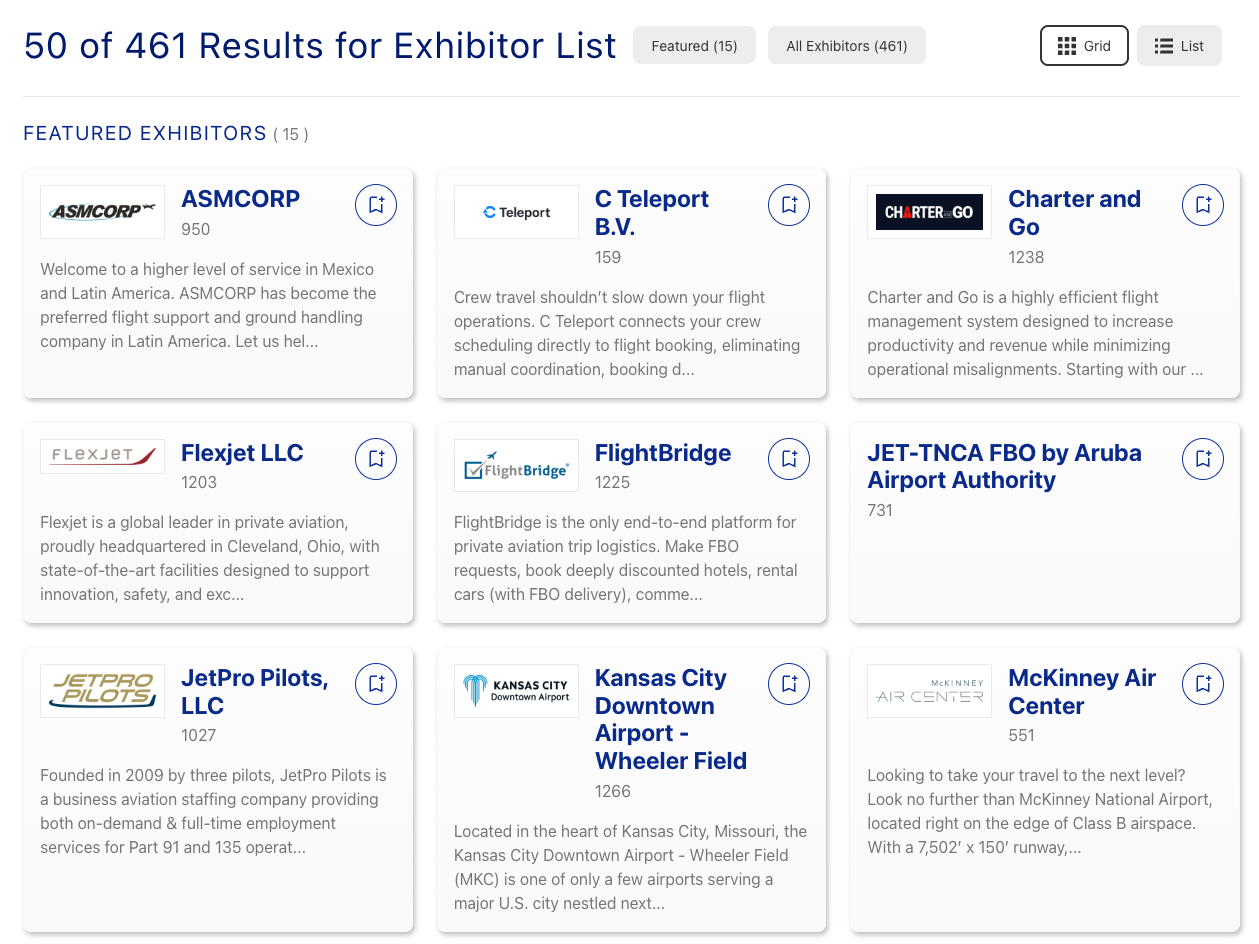
So you pull up the event website. There's a vendor list. Great. Except it's buried in a webpage format that's useless for anything practical. You can't export it. You can't upload it to your CRM. And if you want the actual contact information behind those 400+ company names, you're looking at an hour of manual research — minimum — for someone on your team.
That's the gap most businesses just accept. They either skip the research or burn hours on it.
Here's what I did instead.
Step 1: Let the computer do the scraping
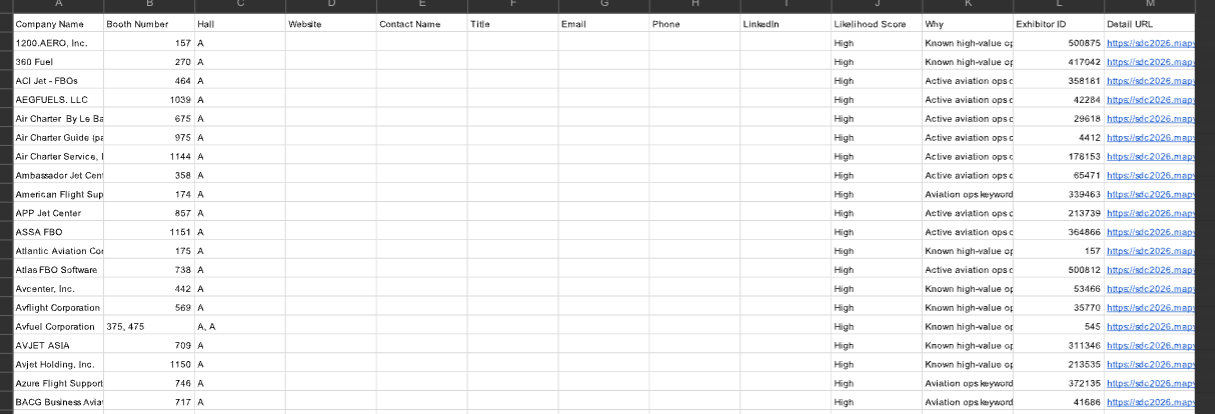
Instead of manually visiting each vendor page and copy-pasting company details into a spreadsheet, I built a simple automation that crawls the event site and pulls that data automatically. What would take a person over an hour took the computer a few minutes. The output: a clean spreadsheet with every vendor, ready to work with.
This isn't magic. It's basic web scraping — the same technology news aggregators and price comparison sites have used for years. The difference is it's now accessible to businesses that aren't software companies.
Step 2: Rank the targets
A list of 400 companies is still noise if you don't know where to start. So the next step was having the automation do basic research on each company and score them — size, relevance, fit — so the highest-value targets surface to the top.
Now instead of a random list, you have a prioritized hit list. Your sales team knows exactly who to approach first on day one of the event.
Step 3: Pull contact information
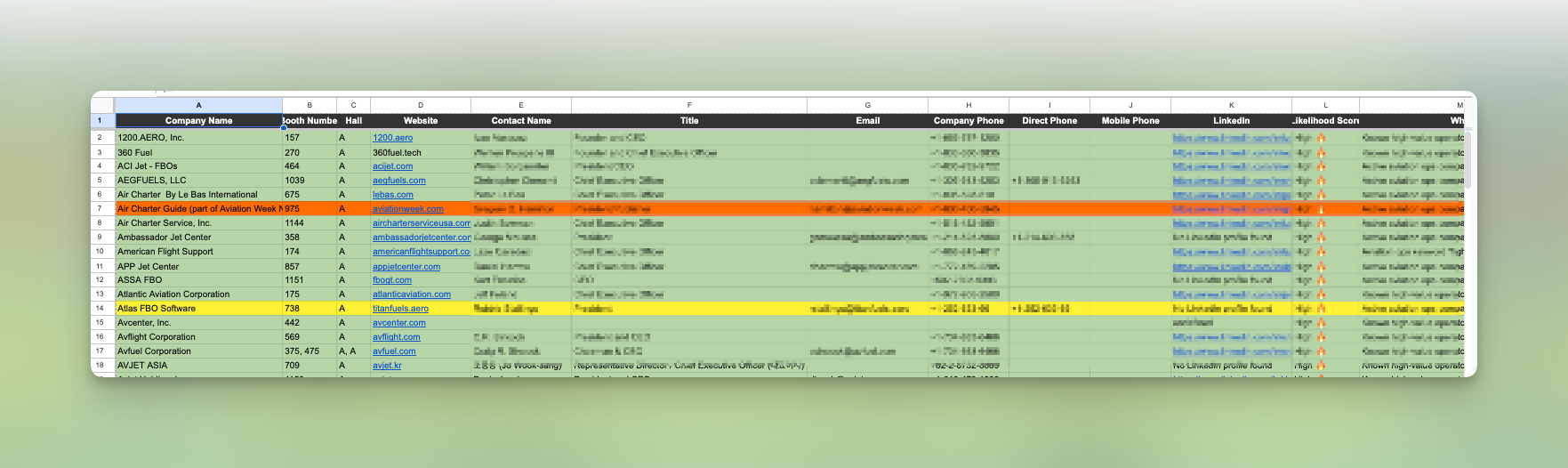
Here's where most DIY attempts stop. You have company names but no decision-maker contacts. That's not a lead list — that's a Wikipedia page.
The final layer of this workflow takes the enriched company data and runs it through research tools to pull down actual contact information: names, titles, emails. The kind of data that makes your CRM useful instead of decorative.
Why this matters
The manual version of this process — scraping, researching, ranking, finding contacts — is exactly the kind of repetitive, low-creativity work that eats your team's time and quietly kills momentum before an event even starts.
Automating it doesn't require a developer on staff or a six-figure software budget. It requires knowing what's possible and connecting the right tools.
Who this is for
If you read this and thought "we literally do that manually every time" — this is for you. If you've got a list of small, annoying manual tasks that you know should be automated but you don't know where to start, that's the exact problem I work on.
It's not as complicated as it looks. DM me and tell me what you're trying to automate. I'll tell you whether it's a two-hour build or a two-week project — and what it would actually take to get there.