Accountability in Aviation Leadership: Dustin Cordier at NBAA-BACE 2025
Accountability Is the Missing Ingredient Separating Good Aviation Teams from Great Ones
By Dustin Cordier, AvSales Talent | Published March 2026 | Aviation Leadership, Team Performance, NBAA-BACE 2025
Every aviation business owner I've worked with can point to a moment when they realized their team wasn't the problem. The culture was.
Not a bad hire. Not a training gap. Not even a process issue. A leadership accountability gap that had been quietly compounding for years — showing up as missed targets, unclear ownership, and a team that waited to be told what to do instead of driving results independently.
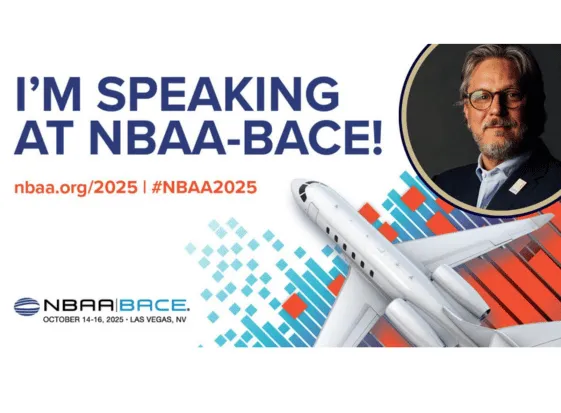
In October 2025, I had the opportunity to lead an interactive workshop at NBAA-BACE in Las Vegas on exactly this challenge: Unlocking Team Excellence by Leading with Accountability.
The session was approved for CAM Application and Recertification credit — which tells you something about how seriously the industry is taking this topic. Here's what we covered, and why it matters for every aviation business owner who wants a team that performs without constant oversight.
Why Accountability Is the Missing Ingredient in Aviation Teams
Business aviation is a high-stakes, relationship-driven industry. The margins for error are thin, the clients are demanding, and the operational complexity is real. Most leaders respond to that pressure by tightening control — approving more decisions personally, staying closer to every deal, keeping their hands on everything.
That's the trap. The tighter the founder holds the reins, the less ownership the team develops. And a team without ownership doesn't hold itself accountable — it waits.
Patrick Lencioni's model — The Five Dysfunctions of a Team — gives us the language to diagnose why this happens and a clear framework for fixing it. The five dysfunctions stack on each other like a pyramid:
Absence of trust — team members protect themselves rather than engage openly
Fear of conflict — artificial harmony masks real disagreements
Lack of commitment — ambiguity allows everyone to avoid full buy-in
Avoidance of accountability — team members won't call out underperformance
Inattention to results — individual agendas override collective outcomes
Most aviation leaders are fighting dysfunction four — accountability avoidance — without realizing that dysfunctions one through three created the conditions for it.
What Accountability Actually Looks Like in a Business Aviation Context
The word gets used constantly and defined almost never. In the workshop, we were specific about it: accountability isn't about consequences. It's about clarity and ownership.
A team member who owns their outcomes doesn't need to be chased for updates. They don't wait to be assigned the next step. They know what success looks like, they know they're responsible for getting there, and they self-correct when they're off track.
In practical terms for aviation business owners, that means:
Roles are defined with outcomes, not just tasks — people know what winning looks like in their position
Commitments are public — the team holds each other to what was agreed, not just what the leader enforces
Performance conversations happen at the team level, not just in one-on-ones with the founder
When this is working, the founder stops being the accountability bottleneck. The team polices itself — and performance becomes a cultural expectation rather than a leadership task.
Accountability isn’t a personality trait. It’s a system. And like any system, it can be built intentionally — or left to chance. Most aviation teams are living with the results of the latter.
— Dustin Cordier, AvSales Talent | NBAA-BACE 2025
How Leadership Drives Ownership — and Why That Drives Bottom-Line Results
The workshop was built as an interactive session — not a lecture. The reason is intentional: accountability can't be taught through passive absorption. It has to be practiced.
One of the central exercises explored how management practices — the specific behaviors leaders model daily — either build or erode team accountability. The data is consistent across industries, and aviation is no exception: teams mirror their leaders. When leaders avoid hard conversations, their teams do too. When leaders own their mistakes publicly, their teams follow.
For aviation business owners, this has a direct financial implication. A team with high accountability:
Closes gaps faster — problems get surfaced and solved before they compound
Requires less founder oversight — which frees leadership time for strategic work
Retains top performers — high accountability cultures attract people who want to be held to a standard
Delivers more consistent results — which directly impacts revenue predictability and company valuation
The connection to the bottom line isn't theoretical. Founder-dependent businesses with low accountability cultures are harder to scale, harder to sell, and harder to run. The inverse is equally true.
Why NBAA-BACE Is the Right Room for This Conversation
NBAA-BACE is the largest business aviation event in the world. The operators, flight department managers, and business aviation leaders who attend aren't looking for generic management advice — they're looking for frameworks that translate directly to the specific pressures of running an aviation operation.
The CAM credit approval for this session reflects that. The Certified Aviation Manager program sets a high bar for what counts as relevant professional development. Accountability leadership clearing that bar signals that this isn't a soft-skills sidebar — it's a core competency for anyone running a business aviation operation.
For AvSales Talent, being on that stage is consistent with what we've always believed: that the talent and systems side of aviation sales can't be separated from the leadership culture those systems operate inside. You can install the best sales process in the industry. If the team doesn't own it, it won't run.
3 Signs Your Aviation Team Has an Accountability Gap
These showed up repeatedly in the workshop — and they're worth being honest about:
You're the last line of defense on every decision. If nothing moves without your input, accountability isn't distributed — it's centralized in you.
Underperformance goes unaddressed until you address it. If peers won't call out peers, the team doesn't have a performance culture — it has a compliance culture.
Your best people are doing more than their share. High performers in low-accountability cultures burn out or leave. If you're leaning on the same two or three people for everything, that's a structural problem, not a personnel one.
Building the Culture That Makes Your Sales System Actually Work
At AvSales Talent, we work with aviation business owners on both sides of the equation: the sales systems and the team culture those systems require to perform. A documented outreach cadence running inside a low-accountability team is just an expensive document.
The operators who scale consistently are the ones who build both intentionally — the right process and the right culture to run it.
If you're an aviation business owner who wants to have that conversation, reach out to our team directly. We work with operators who are serious about building businesses that perform without them in every room.
About Dustin Cordier
Dustin Cordier is a partner at AvSales Talent and a business aviation leadership coach specializing in strategy, execution, and sales systems for aviation business owners. He moderated the Corporate Jet Investor Miami 2025 panel on founder-led to investor-ready transitions and led the NBAA-BACE 2025 workshop on accountability in aviation leadership. Connect with Dustin on LinkedIn or reach out through avsalestalent.com.